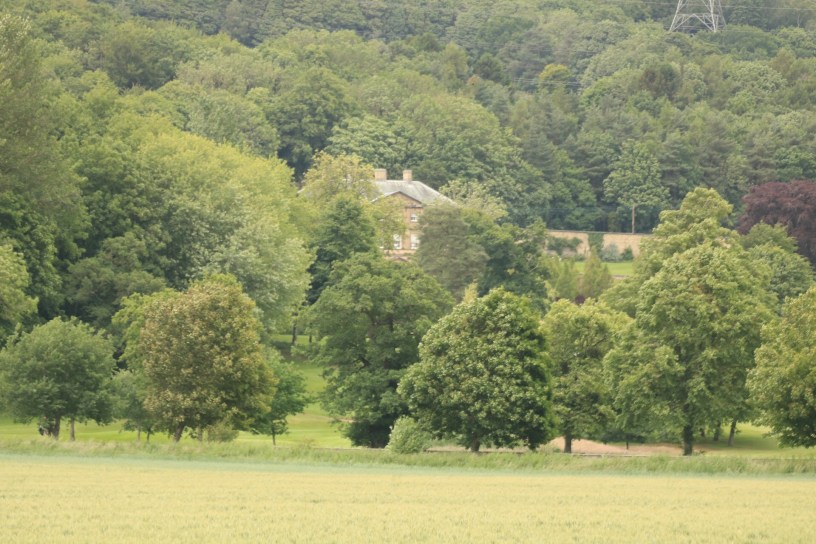
I’m not a fan of golf. I tried it when I lived in Cuba; blue skies, a course open only to the privileged few foreigners who could pay their fees in US Dollars, well kept greens and fairways, and a club house with everything that the exhausted pseudo-athlete could want after a hard day chasing a ball around the lush green countryside.
But I couldn’t get into it. For every 50 shots, just one or two would be satisfactory. After six months, I gave it up in a fit of mojito-inspired pique and vowed never to haunt a golf course again for as long as I lived.
So it was a surprise to me that I ended up on one this afternoon, despite the best attempts of the course owners to deter non-enthusiasts like me by the use of unwelcoming signs.
Because I can’t get away with not doing any exercise, I have taken to walking a fair bit lately, seizing advantage of the extra free time that I have been given as a result of being furloughed. And today my starting point was Wylam, the birthplace of the railways (although some Cornishmen dispute that to this day. If Richard Trevithick had legged it to the patent office a bit quicker, the whole course of history might have been different. But he was slow off the mark and George Stephenson, Wylam’s most famous son, beat him to it. That’s why he is known as the father of the railways, and Richard Trevithick, as genius as he was, is simply a mining engineer and inventor from the other end of the country).
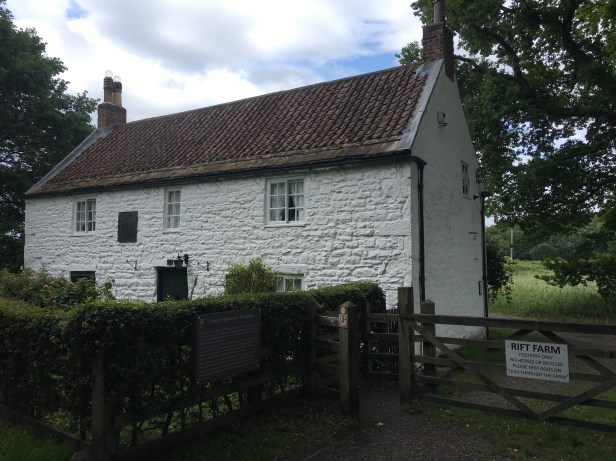
I parked in Wylam and headed off towards Newburn, a route which takes the walker past George Stephenson’s birthplace. It’s a fairly isolated cottage half a mile down the track, and is currently cared for by the National Trust, although it’s not been open to the public for a couple of years now. The path that passes it is, of course, an old railway line, long since closed as we don’t need railways anymore because we all have cars.
It’s a popular path with walkers like me, as well as cyclists, runners, dawdling families, parents with prams, dog walkers, walkers with Nordic sticks (why?) and Uncle Tom Cobbly (a distant relative of Richard Trevithick I suspect). In any case it proved far too crowded for this curmudgeon, who likes people to enjoy themselves but not in the same place as himself, so I veered off to the left at this point and beetled off around the back of the cottage.
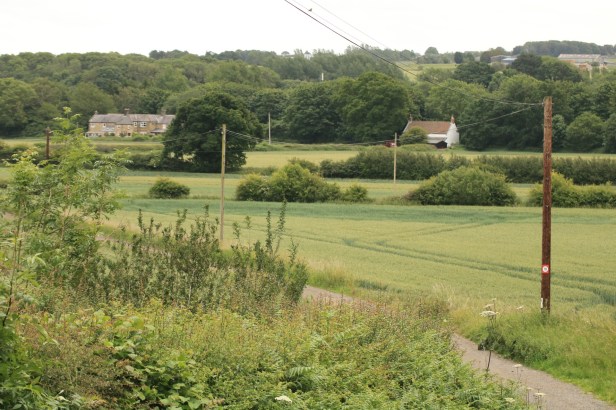
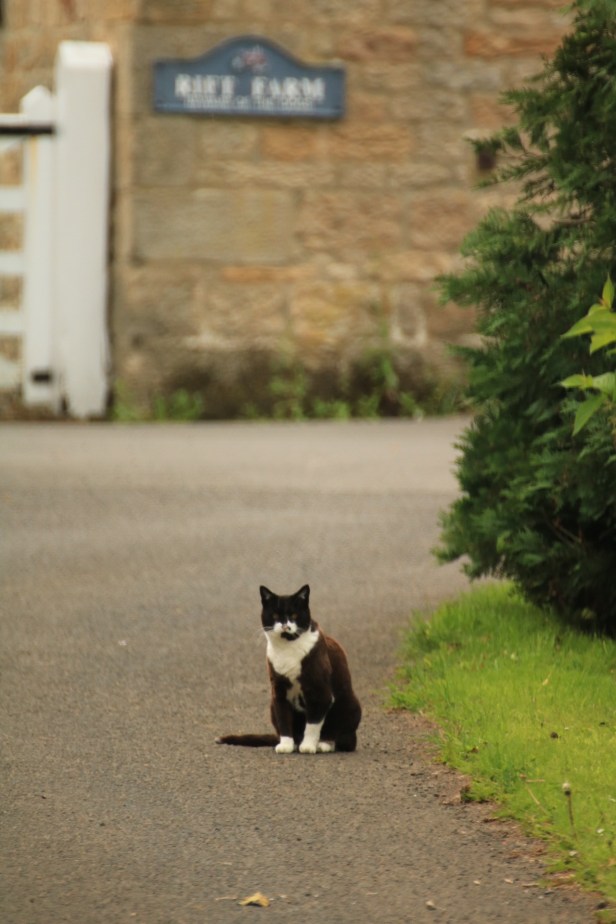
A view developed nicely behind me, although the path in front of me tried to put me off by going uphill. But it was fairly gentle incline and I eventually arrived at a place known locally as The Rift, which turned out to be a farm. I was threatened by a cat here. Well, not threatened exactly, but he definitely gave me the evils as I approached. In fact he turned out to be an old softie after I showed him who was boss.
The path came out onto a road, where I turned right, and went alongside a field and into the woods. On the other side of the woods was a gate, bearing the sign “NO PUBLIC ACCESS, SO BUGGER OFF,” or something along those lines. But then, in smaller writing underneath, it asked that you keep to the footpaths, and don’t be offended if “security staff” ensure that you do just that.
So I’d arrived at the golf course. Well, I thought, I’d come this far, so in I went. Down through some trees, I followed a very well marked footpath which ended up running alongside the course itself. I understood the note about security staff now, because if I were to wander off this part of the route it could end up like trench warfare, with me hunkered down while bullets – well, golf balls – whizzed over my head.
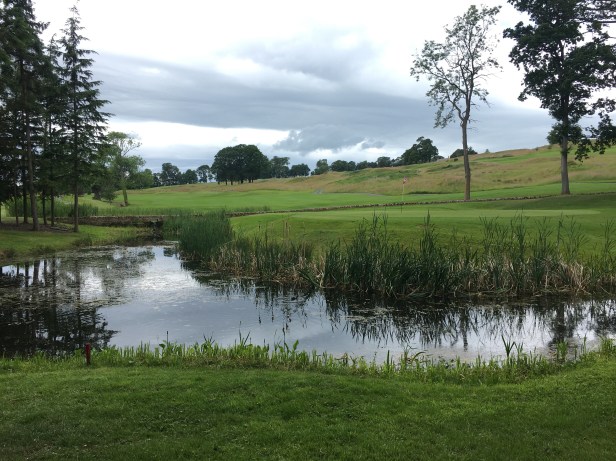
After exchanging pleasantries with one of the many players as he went from one hole to the next, I found my way off the course and once again on to the dismantled railway path that took me back to Wylam, passing George Stephenson’s cottage once for a second time.
As I got back to Wylam half a mile on, I went through what most people think of as the village car park. At the side of the path is the faintest trace of what was once North Wylam Station, which closed in 1968 and was demolished in 1975.
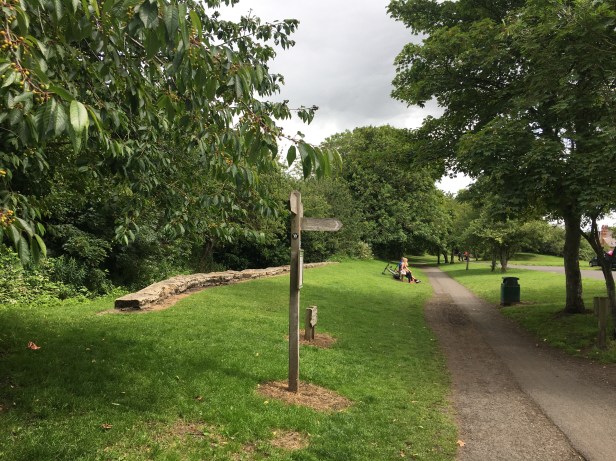
Still, at least we’ve got somewhere to park the car nowadays.
 Steve's Journal