Drama in an English Village
You think the current contretemps over toilet rolls in Tesco is bad? Good job you weren’t around in 1464. It was a whole lot worse then, I can tell you (and no, I don’t remember it before anyone makes that joke).
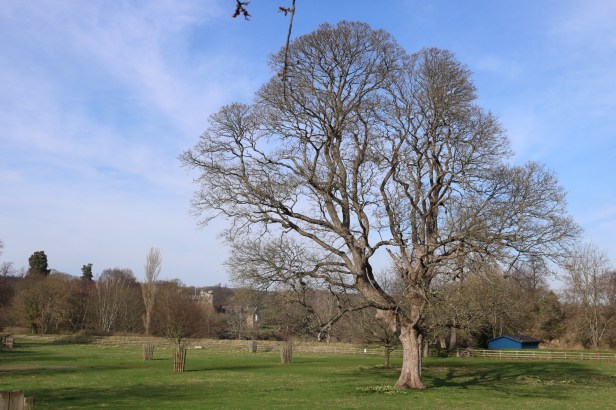
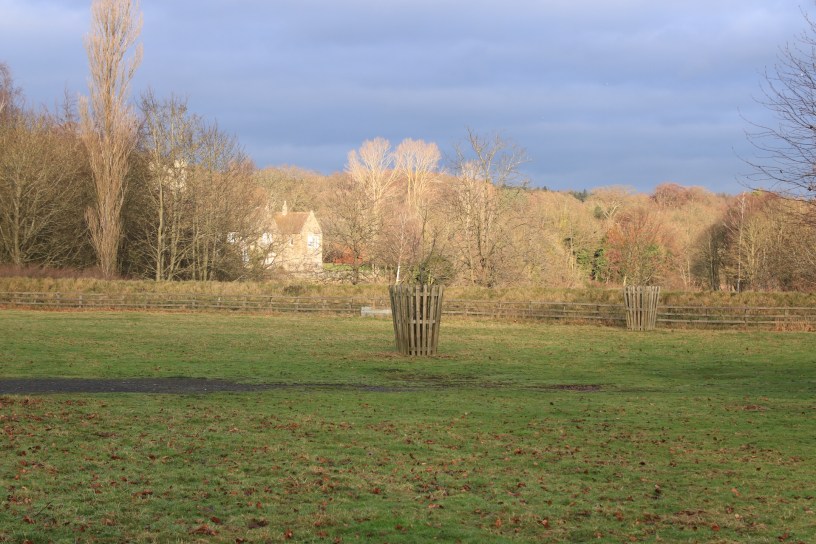
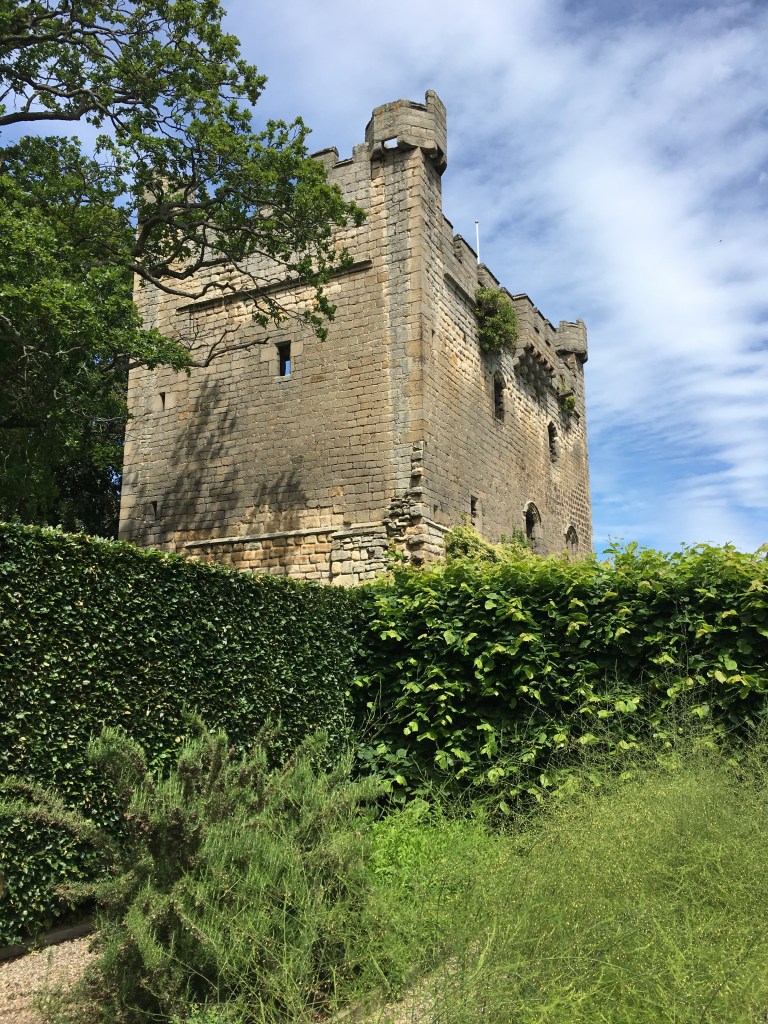
Come with me if you will to Bywell, a tiny hamlet on the north bank of the River Tyne, about 6 miles from Prudhoe. It used to be a lot bigger, but nowadays it has only a Manor House (now the seat of Viscount Allendale), two churches (next to each other, which is a bit weird) and a castle. Add to that about ten houses, and you might think that it is a bit top heavy in the Grand Old Buildings department. There are no shops, no theatres, and rather unusually these days, no Costa. It does however have its own place in the history of these islands, because 556 years ago, the King of England left his crown at the castle there.
The King in question was Henry VI of Lancaster, “King of England and of France and Lord of Ireland”. And he was a bit of a disappointment, not to put too fine a point on it. His Dad – Henry V – was one of the great warrior Kings, fond of giving the French an occasional kicking at places like Agincourt. He saved English lands in France and was widely considered to be a bit of a lad, as well as being handy with a sword. But he died at the age of 35, making way for his son to be crowned, as is the fashion in the Royal Family even to this day.
But the imaginatively-titled Henry VI didn’t hold with all this violence. He spent a lot of his day at the office in prayer, and to be fair to him seems to have had some kind of mental illness. But as a result, he was no leader of men and he lost a lot of the lands in France that his Dad had won.
The house of York was particularly miffed about all this and took up arms against Lancaster. We know this period as the Wars of the Roses, with armoured knights on horseback, banners fluttering in the wind, castles on the hills and the age of chivalry giving the whole effort a bit of a romantic tinge. Nothing however could be further from the truth. The whole episode was brutal and unforgiving, as the town of Hexham found out on 15 May 1464.
After losing the battle of Hedgeley Moor against the Yorkists, the Lancastrian forces, led by The Duke of Somerset (keep your eye on him, he turns up later) had withdrawn north to Alnwick with its much bigger castle, which is now a film set surrounded by tea rooms and bookshops. Lord Montague, the Víctor at Hedgeley Moor, took his men to Newcastle, not for a celebratory night out at Bigg Market, but to try and root out and finish off his enemy.
But while Montague wasn’t looking, Somerset nipped down the A1 and headed off for Hexham, turning right on to the A69 and heading west along the north side of the Tyne Valley.
In Newcastle, Montague got wind of this. He put his pint down, climbed up on his horse and set off in hot pursuit. But he took the south side of the river, now the A695, and missed Henry, who by this time was taking refuge in Bywell Castle. If he had taken the north bank, the battle of Hexham would now be known as the Battle of Bywell.
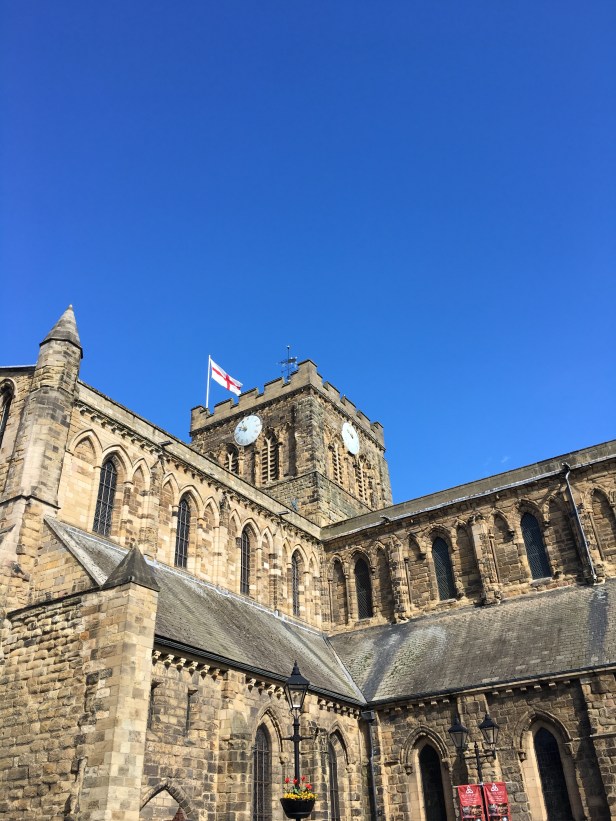
As it was, it all kicked off at Hexham, when the two forces finally met. It ended in a decisive victory for Montague’s Yorkists; if it had been a football match it would probably have ended 6-0 to the team in white (Rose).
Remember the Duke of Somerset? He was beheaded, along with 30 of his senior men, almost immediately after the final whistle. So much for chivalry.
Afterwards, Montague rushed back to Bywell castle to catch Henry and put an end to the Lancastrian rebellion. He arrived at the village fresh from that beheading fest, kicked open the door and found, lying on the floor, a helmet, a sword….and a crown. Henry had fled.
Montague was rewarded for his efforts by being declared the Duke of Northumberland. And Henry was eventually captured in Lancashire, and probably murdered in the Tower of London.
Remember all that next time you’re out to get toilet rolls.
 Steve's Journal